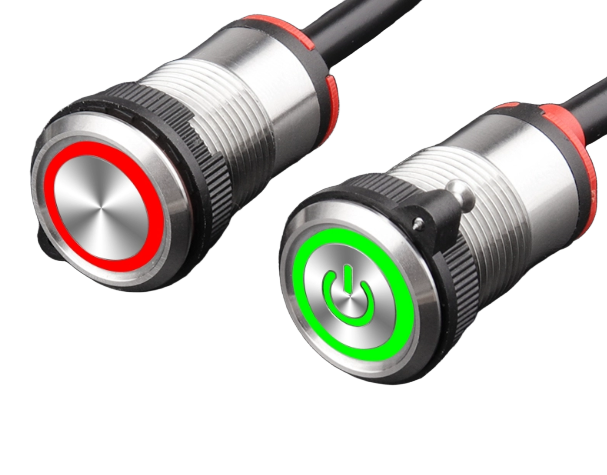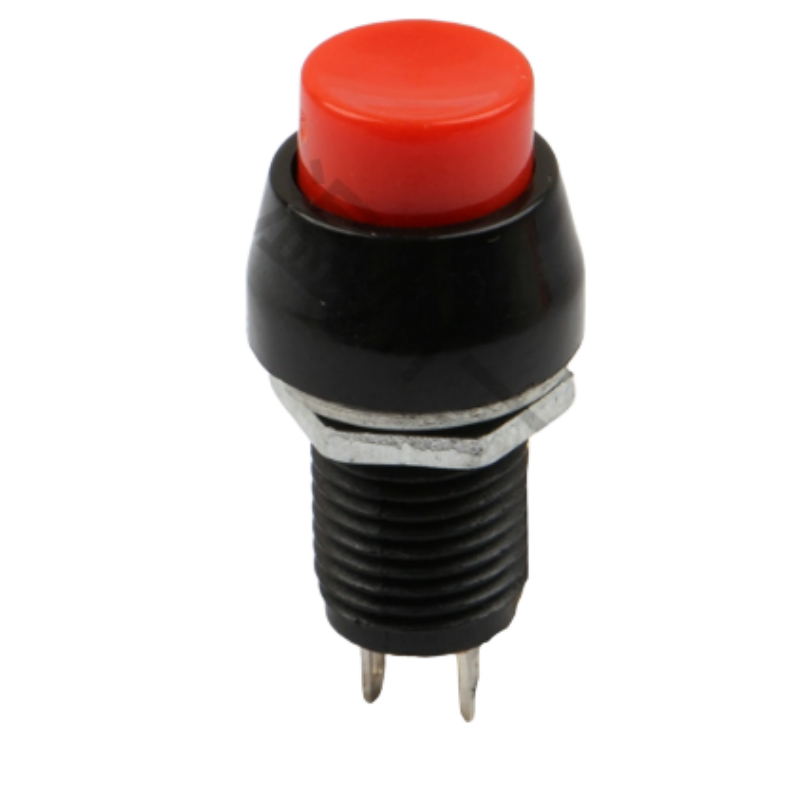
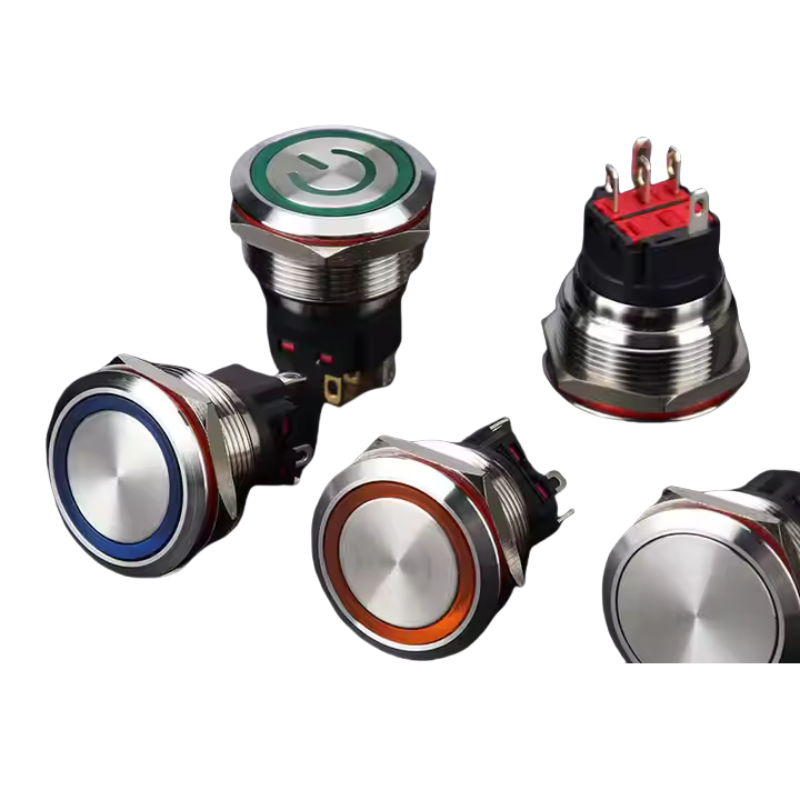
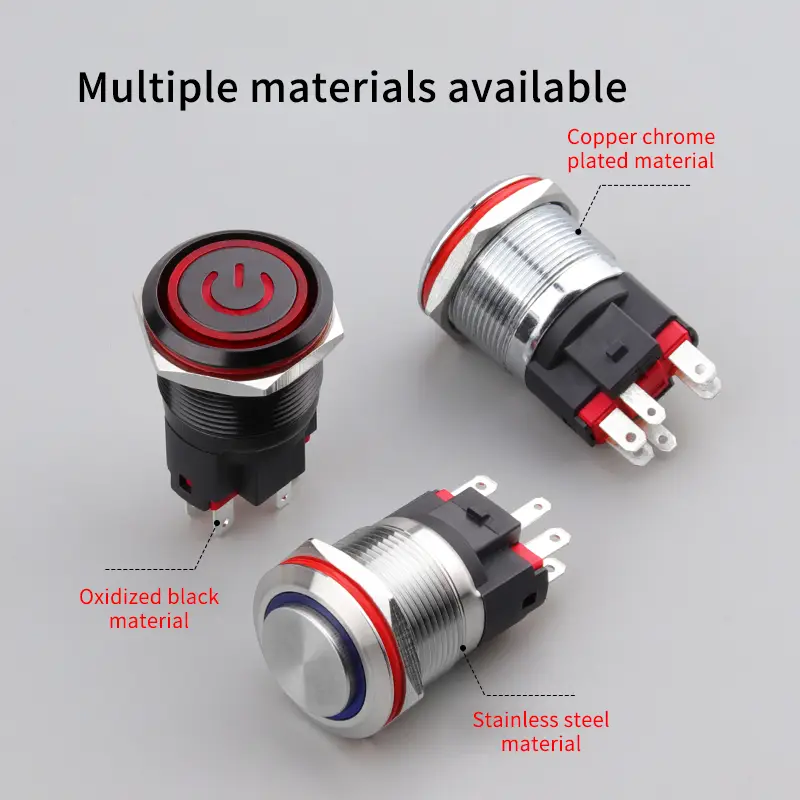
 In the realm of industrial automation, where precision, reliability, and durability are paramount, the 22mm 1NO1NC LED Self-Locking Metal Push Button Switch emerges as a critical component for seamless operations. Crafted from premium stainless steel with an aluminum-brass momentary ring, this switch is engineered to withstand the harshest industrial environments, ensuring longevity and consistent performance. Its self-locking mechanism and integrated LED indicator elevate control efficiency, making it indispensable for machinery control, emergency stop systems, and process initiation in automated production lines. By integrating this high-performance switch, manufacturers can significantly enhance equipment reliability, minimize downtime, and optimize workflow efficiency, ultimately driving productivity in advanced industrial settings.
1. Robust Construction for Harsh Industrial Environments
Industrial automation systems operate under extreme conditions, including exposure to dust, moisture, vibrations, and corrosive substances. The switch’s stainless steel body and aluminum-brass ring provide exceptional durability, resisting wear and deformation even in high-vibration or dusty settings. This rugged design ensures uninterrupted operation, reducing the frequency of replacements and maintenance interventions. For instance, in manufacturing plants with stringent hygiene protocols, such as food processing or pharmaceutical facilities, the switch’s corrosion-resistant properties prevent degradation from frequent cleaning agents, maintaining operational integrity over extended periods.
2. Enhanced Control Flexibility with 1NO1NC Configuration
The Single-Pole Double-Throw (SPDT) 1NO1NC configuration offers versatile circuit management, enabling precise start-stop functions in automated assembly lines. This design allows the switch to act as a normally open (NO) or normally closed (NC) contact, providing flexibility for diverse control scenarios. In emergency stop systems, for example, the NC contact ensures immediate circuit interruption upon actuation, enhancing safety by halting machinery during critical faults. The self-locking mechanism further stabilizes operation by maintaining the switch’s position until manually reset, preventing unintended activations—a vital feature for safety-critical processes in industries like automotive or heavy machinery manufacturing.
3. Real-Time Visual Feedback with Integrated LED Indicator
Visibility in industrial settings is crucial for operator efficiency and fault detection. The built-in LED indicator provides immediate status confirmation, alerting users to active modes or potential issues. For example, in smart factories where conveyors or robotic arms require precise control, the LED’s glow signifies operational states, enabling swift adjustments and reducing human error. This visual feedback is especially beneficial in low-light environments or noisy production floors, where audible signals may be ineffective. By offering clear operational cues, the switch enhances system transparency and simplifies troubleshooting.
4. Safety Compliance and Operational Efficiency
Industrial automation prioritizes safety and efficiency to minimize risks and maximize output. The switch’s sturdy design aligns with stringent safety standards, such as emergency stop protocols, ensuring reliable performance under pressure. Its ability to simplify control interfaces reduces response times in high-speed production environments, where milliseconds matter. For instance, in automated packaging lines, the switch’s quick actuation and stable locking feature prevent delays during mode transitions, maintaining workflow continuity. Additionally, the corrosion-resistant materials and sealed structure cut down on maintenance costs, lowering the total cost of ownership by minimizing downtime and part replacements.
5. Real-World Integration in Smart Factories
Imagine a modern smart factory where this switch orchestrates critical functions like conveyor belt pauses or machine resets. The momentary ring allows for quick, tactile actuation, while the LED indicator enhances real-time monitoring. Engineers designing next-generation automation equipment benefit from the switch’s ability to bridge mechanical reliability with digital control needs. For example, in a robotic assembly cell, the switch’s integration with programmable logic controllers (PLCs) enables seamless coordination between mechanical actuators and sensors, optimizing production cycles. This synergy not only boosts efficiency but also future-proofs operations against evolving industrial demands.
6. Why This Switch Matters for Industrial Automation
As industries embrace advanced automation, the choice of components like this push button switch transcends functionality—it becomes a strategic enabler of innovation. By addressing core challenges such as safety compliance, operational efficiency, and maintenance advantages, the switch empowers manufacturers to build smarter, safer, and more resilient systems. Its role in reducing human error, accelerating response times, and withstanding harsh conditions underscores its value as a foundational element in the automation ecosystem.
In conclusion, the 22mm 1NO1NC LED Self-Locking Metal Push Button Switch is not merely a component but a pivotal driver of industrial automation excellence. Its robust construction, flexible control options, and real-time feedback capabilities make it an ideal choice for engineers seeking to enhance reliability and productivity in automated systems. As industrial landscapes evolve, this switch stands as a testament to innovation, enabling manufacturers to achieve new heights of operational efficiency and resilience.