
Introduction: Why Your E-Stop Is More Than Just a Red Button
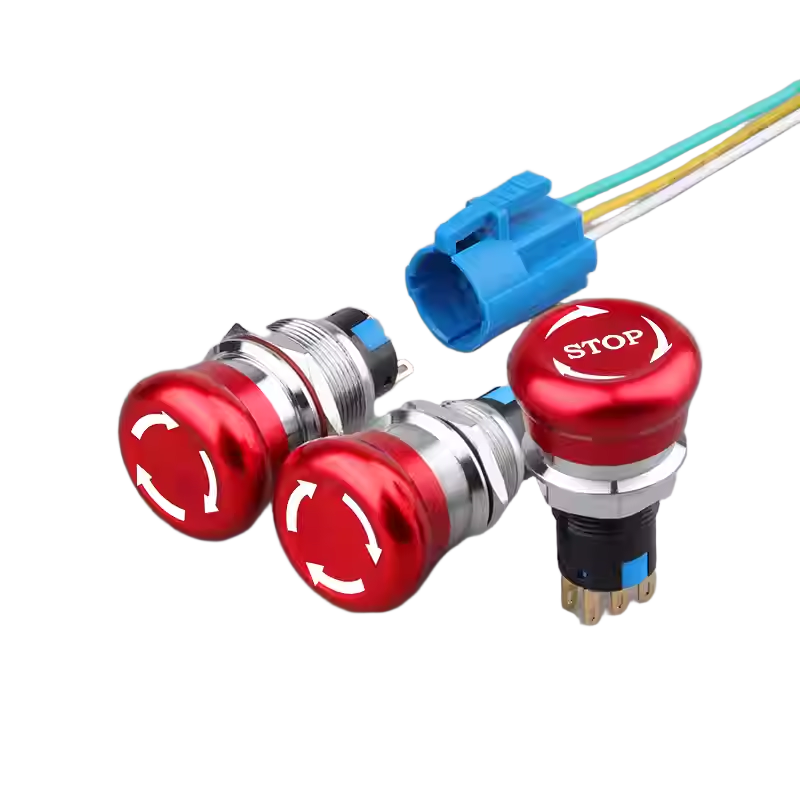
In the world of industrial machinery and CNC equipment, the emergency stop (E-Stop) isn’t merely a component—it’s your last line of defense. When seconds matter, the right E-Stop can mean the difference between a minor interruption and a catastrophic incident. Today, we’re examining why the 19mm Mushroom Head Waterproof Metal Emergency Stop Switch represents the gold standard for industrial safety applications.
The Non-Negotiable Requirements for Machinery E-Stops
Before diving into specifications, let’s establish what every safety engineer knows about machinery E-Stops:
Instantaneous Activation: Must be immediately accessible and operable
Unmistakable Identification: High-visibility red mushroom head
Positive Action: Requires deliberate reset to prevent accidental restart
Environmental Resilience: Must function reliably in harsh conditions
Electrical Reliability: Consistent performance over thousands of cycles
Why the 19mm Metal Mushroom Head Switch Excels
1. Physical Design for Emergency Situations
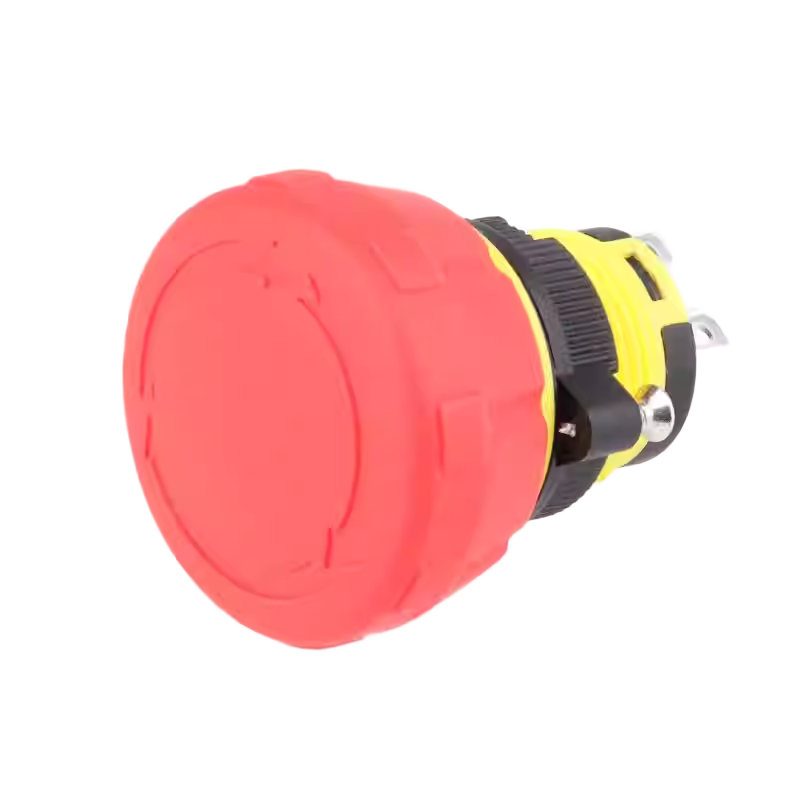
The mushroom head design isn’t just for aesthetics. Its large surface area (compatible with 19mm panel cutouts) allows for:
Palm-strike activation even with gloved hands
360-degree accessibility from any approach angle
Positive tactile feedback ensuring the operator knows activation has occurred
2. Built for Industrial Environments
IP55 Waterproof Rating at Button Interface: Resists coolant splash, oil mist, and washdown procedures common in machining environments
Metal Housing Options: Choose between SUS304 stainless steel (corrosion-resistant), nickel-plated brass (conductive grounding), or anodized aluminum (lightweight durability)
-30°C to +85°C Operating Range: Functions reliably in unheated warehouses or near heat-generating equipment
3. Electrical Performance That Matters
For CNC and industrial machinery, electrical specs aren’t just numbers—they’re safety assurances:
| Parameter | Why It Matters for Machinery |
|---|---|
| 3A @ 250VAC Resistive | Handles control circuit loads directly |
| 0.75A Inductive Load Rating | Safely breaks motor contractor coils without welding |
| ≤50mΩ Contact Resistance | Ensures reliable circuit completion over time |
| 500,000 Electrical Cycles | Outlasts typical machinery service intervals |
Configuration Options: SPST vs. SPDT
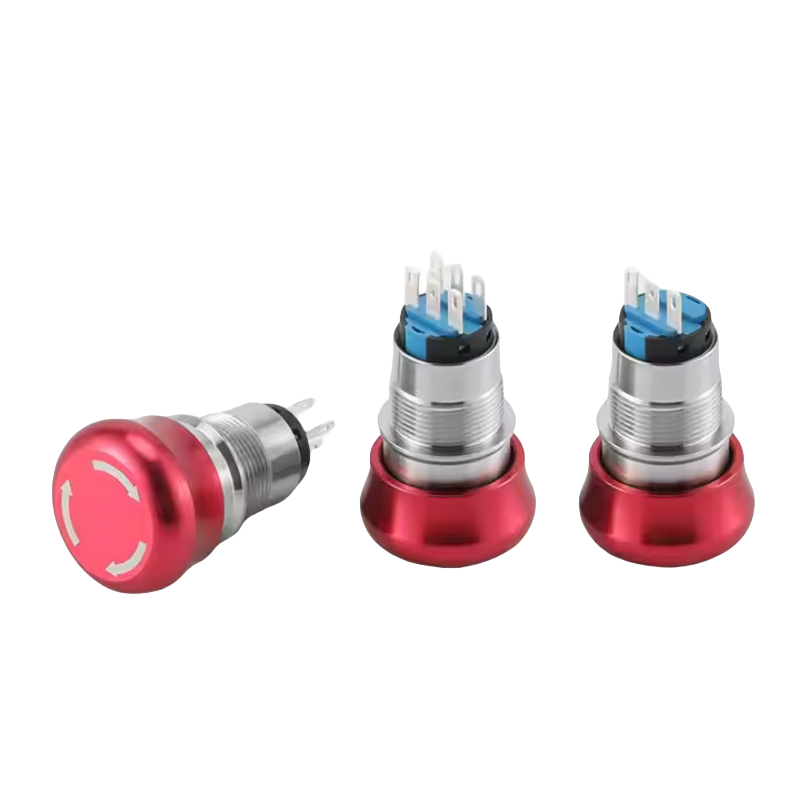
3-Pin SPST (Single Pole Single Throw)
Ideal for: Simple safety circuits that break a single control line
Typical Use: Direct series connection in safety relay circuits
Advantage: Simpler wiring, lower cost
6-Pin SPDT (Single Pole Double Throw)
Ideal for: Advanced safety systems requiring dual-circuit monitoring
Typical Use: Safety circuits with cross-monitoring, where both NO and NC contacts are monitored by a safety controller
Advantage: Provides diagnostic capability—controller can detect contact welding or switch failure
Installation Best Practices for Machinery Integration
1. Mounting Considerations
Ensure the 19.0-19.1mm panel hole is clean and burr-free
Position within 600mm of the operator’s normal working position (ISO 13850 requirement)
Consider multiple units for large machines with multiple workstations
2. Wiring Recommendations
Use the quick-connect .250″ (6.35mm) terminals for secure connections
Implement dual-channel safety circuits when using SPDT configuration
Always test circuit functionality after installation
3. Integration with Safety Systems
Connect to category 3 or 4 safety circuits (ISO 13849-1)
Consider latching (self-locking) version to prevent automatic restart
Implement manual reset requiring deliberate twist/pull action
Real-World Application Scenarios
CNC Machining Centers
Mount on control pendant and machine enclosure
Use SPDT configuration for dual-channel safety monitoring
Select SUS304 housing for coolant resistance
Industrial Presses & Stamping Machines
Position at multiple operator stations
Implement rope-operated E-Stops for large machines
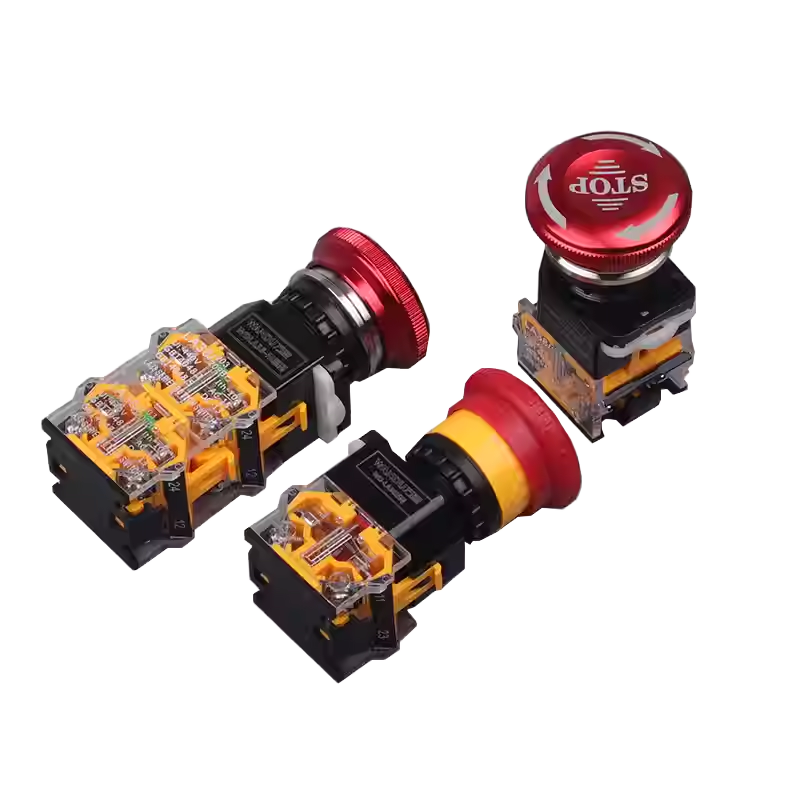
Choose high-visibility red with yellow background ring
Robotic Work Cells
Install on safety fencing at access points
Use latching version to maintain stop state until deliberately reset
Consider LED-illuminated versions for low-light areas
Maintenance & Testing Protocol
Even the most robust E-Stop requires verification:
Weekly Functional Test: Activate and verify machine response
Monthly Visual Inspection: Check for physical damage or contamination
Annual Electrical Testing: Verify contact resistance and insulation values
5-Year Replacement Cycle: Consider proactive replacement based on mechanical life (1,000,000 cycles)
Beyond Compliance: Creating a Safety Culture
The right E-Stop contributes to broader safety objectives:
Operator Confidence: Knowing the E-Stop works reliably encourages proper use
Reduced Downtime: Reliable switches mean fewer false trips and quicker recovery
Regulatory Compliance: Meets requirements of ISO 13850, IEC 60947-5-1, and machine-specific standards
Insurance & Liability: Proper safety components support compliance documentation
Conclusion: Your Safety Deserves This Level of Engineering
In industrial machinery and CNC equipment, compromise on safety components is never an option. The 19mm Mushroom Head Waterproof Metal Emergency Stop Switch provides:
✅ Immediate, reliable activation when every second counts
✅ Industrial-grade durability for harsh environments
✅ Flexible configuration for any safety architecture
✅ Long-term reliability through 1,000,000 mechanical cycles
When you specify this switch, you’re not just buying a component—you’re investing in a safety system that protects your people, your equipment, and your productivity.
Need help integrating the right E-Stop into your machinery design? Contact our safety engineering team for application-specific guidance and compliance support.
Comments are closed