
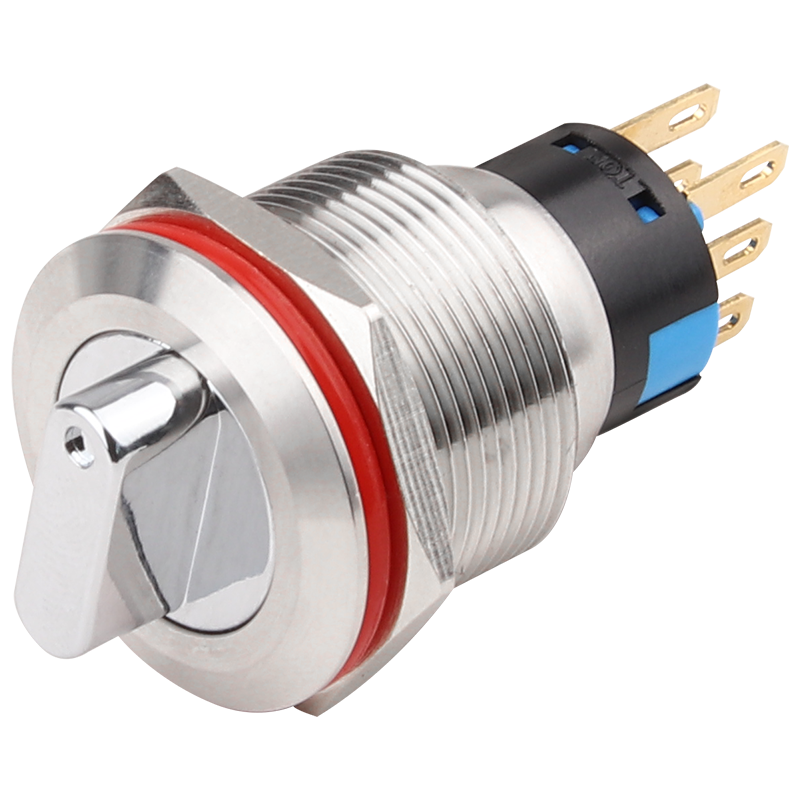
 Industrial control panels and machinery frequently operate under demanding conditions where moisture, dust, and constant use threaten reliability. However, maintaining consistent performance in these environments is non-negotiable for productivity and safety. Consequently, the choice of every component, especially manual control interfaces, becomes a critical decision. Specifically, a standard switch often fails under such duress, leading to downtime and costly repairs. Therefore, selecting a switch engineered for resilience is paramount. This article explores the vital role of industrial-grade waterproof rotary switches. We will detail how their robust construction, exemplified by 16mm, 19mm, and 22mm variants, solves common operational challenges. Furthermore, we will illustrate their practical applications across key industries and provide guidance for integration. Ultimately, understanding this component’s advantages ensures you specify a solution that guarantees long-term control and durability for your equipment.
Engineered for Resilience: Core Features of Waterproof Rotary Switches
These switches are fundamentally designed to outperform in tough settings. Their primary defense is exceptional sealing. For instance, high-quality switches achieve IP65, IP67, or higher ratings. This sealing effectively blocks ingress from dust, pressurized water jets, and temporary immersion. Consequently, they perform flawlessly in washdown areas, outdoor installations, or humid climates where corrosion and failure are common risks.
Durability extends beyond waterproofing. The construction utilizes premium materials like stainless steel shafts and high-strength thermoplastics. These materials resist corrosion, impact, and chemical exposure. Moreover, the internal mechanism is engineered for millions of reliable cycles, providing consistent electrical contact and tactile feedback over its lifespan. Additionally, the availability in multiple shaft diameters (16mm, 19mm, 22mm) offers flexibility for different panel thicknesses and torque requirements. This combination of features ensures the switch is not just a component, but a durable asset that withstands the test of time and environment.
Application Spotlight: Solving Industry-Specific Control Challenges
In Food & Beverage Processing and Pharmaceutical Manufacturing, hygiene is paramount. Equipment must endure frequent high-pressure, high-temperature washdowns with cleaning agents. Here, a waterproof rotary switch is indispensable. For example, a 22mm switch on a mixing tank control panel can reliably select between different agitation speeds or operational modes. Its sealed design prevents fluid ingress that would compromise electrical safety or cause malfunction, thereby ensuring uninterrupted production and compliance with stringent sanitary standards.
Similarly, the Marine, Offshore, and Water Treatment sectors face constant moisture and corrosive elements. Control systems for pumps, winches, or filtration units require interfaces that will not degrade. A marine-grade waterproof rotary switch, often with a corrosion-resistant brass or stainless-steel body, provides dependable control on vessel dashboards or outdoor control stations. Its stable operation prevents accidental disconnection or failure that could lead to critical system stoppages in remote or harsh locations.
Furthermore, Agriculture, Construction, and Heavy Machinery benefit greatly. Dust, mud, vibration, and weather exposure are daily challenges. A robust 19mm rotary switch in a tractor cab or on an excavator’s control arm can cycle through attachment settings or operational modes. Its rugged design ensures it remains operational despite constant vibration and particulate exposure, directly enhancing equipment uptime and operator control in the field.
Selecting and Integrating the Right Switch for Your System
Choosing the correct switch involves a practical assessment of your needs. First, confirm the environmental protection rating (IP code) required for your application’s exposure level. Next, evaluate the electrical specifications: voltage, current rating, and the number of positions/poles needed for your circuit logic. Then, consider the mechanical requirements, including panel cut-out size (16mm, 19mm, 22mm), shaft length, and desired actuation torque.
Integrating the switch effectively is also crucial. Ensure proper gasket or O-ring compression during panel mounting to maintain the advertised IP rating. For instance, following the manufacturer’s torque specifications for the mounting nut is essential to create a complete seal without damaging the components. Additionally, planning for clear, durable labeling of switch positions enhances usability and safety for the end operator. Proper selection and installation transform this component from a simple part into a reliable long-term interface.
Conclusion: Secure Uninterrupted Control with the Right Solution
In summary, an industrial waterproof rotary switch is a strategic solution for reliable control in adverse conditions. It directly confronts the challenges of moisture, contamination, and physical stress that disable ordinary components. Therefore, specifying a high-grade switch is an investment in reducing downtime, enhancing safety, and protecting your larger equipment investment.
Our range of robust waterproof rotary switches, available in 16mm, 19mm, and 22mm configurations, is engineered to meet these exact demands. We provide the technical expertise to help you select the optimal model for your specific environment and electrical requirements. For reliable performance where it matters most, contact our team today to discuss your project needs and find the ideal waterproof rotary switch solution.

Comments are closed