
 The Ultimate Guide to Industrial Panel Indicators: Why Technical Specifications Matter
 The Ultimate Guide to Industrial Panel Indicators: Why Technical Specifications Matter
In the world of industrial automation and CNC machinery, reliability isn’t just a feature—it’s a requirement. Every component, no matter how small, plays a critical role in the safety, efficiency, and longevity of your equipment. When it comes to machine status indication, operator safety, and system feedback, the Industrial Panel Indicator is the unsung hero of the shop floor.
But not all indicators are created equal. Whether you are integrating a 5th-axis roller cam drive or building a high-speed machining center, understanding the technical specifications of your indicator switches is essential for ensuring seamless operation.
Here is a deep dive into the key technical parameters that matter for B2B buyers and system integrators.
1. Durability in Harsh Environments: IP67 & Material Selection
Industrial environments are unforgiving. Coolant, metal shavings, dust, and extreme temperatures are daily challenges.
Waterproof Rating: For critical applications—such as a 5th-axis rotary table or a CNC machining center—the indicator must withstand direct coolant spray. A rating of IP67 on the end face ensures that the component is dust-tight and can be submerged in water temporarily without failure.
Housing Materials: Depending on your environmental needs, you can choose from SUS304 stainless steel for maximum corrosion resistance, brass with nickel plating for durability, or anodized aluminum alloy for lightweight, high-strength applications.
Temperature Range: With an operating range of -30°C to 85°C, these indicators are designed to perform reliably in both freezing warehouses and high-heat machining zones.
2. Electrical Integrity: Safety and Compatibility
When integrating indicators into a CNC control system or a servo-driven axis, electrical safety and signal clarity are paramount.
Dielectric Strength: A robust indicator should offer >100MΩ insulation resistance and withstand 2500 VDC . This high dielectric strength prevents electrical leakage, ensuring that the indicator does not interfere with sensitive control systems like the servo motor drives managing your rotary axis.
Wide Voltage Range: Flexibility is key for B2B integration. These indicators support a broad spectrum of voltages (AC/DC: 3.3V to 220V), making them compatible with standard PLCs, CNC controllers, and custom power supplies without the need for external converters.
Electrical Life: Rated for approximately 40,000 hours or 40,000 operations , these units are built for long-term, continuous use, reducing maintenance cycles and downtime.
3. Customization and Signal Clarity: Lighting and Polarity
In a busy machine shop, operators need to know the machine status instantly from across the room. Clear visual feedback is non-negotiable.
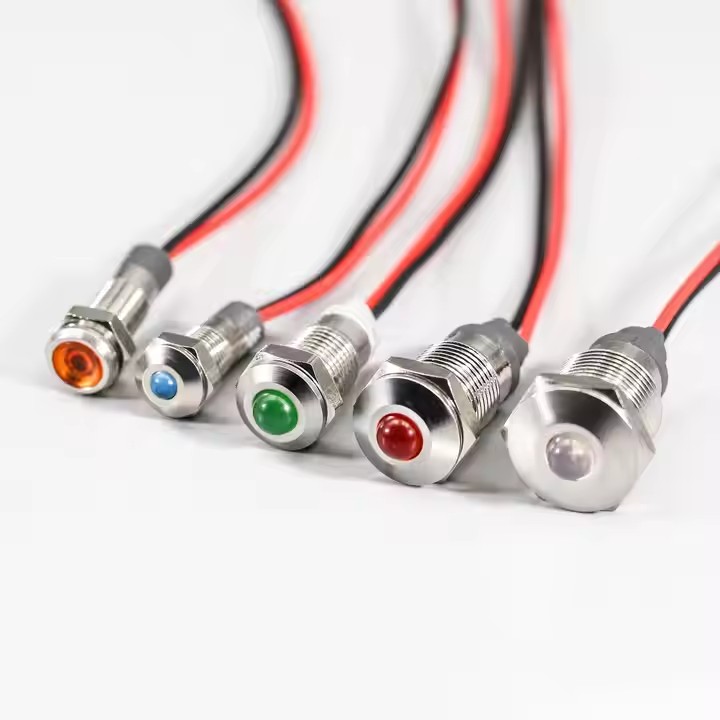
LED Color Options: Standard colors include Red, Green, Blue, Yellow, and White. Red typically indicates alarms or faults, while green signifies “in operation” or “ready”—critical for safety protocols during continuous 5-axis machining cycles.
Circuit Configurations: To meet diverse wiring requirements, these indicators are available in several electrical configurations:
Single Color (Non-polarity): Simple on/off status.
Dual Color (Common Anode or Common Cathode): Allows for color-changing functionality to indicate different states (e.g., “Idle” vs. “Running”) using the same unit.
Customizable: For complex builds, manufacturers can produce dual-color and three-color options with common anode or common cathode setups, enabling sophisticated status signaling without cluttering the control panel.
4. Physical Installation: Standardized Mounting
Integration speed is critical for machine builders. Standardization simplifies assembly and reduces inventory complexity.
Mounting Hole Diameters: To accommodate different panel thicknesses and design requirements, these indicators are available in standard diameters: 6–6.1mm, 8–8.1mm, 10–10.1mm, and 12–12.1mm.
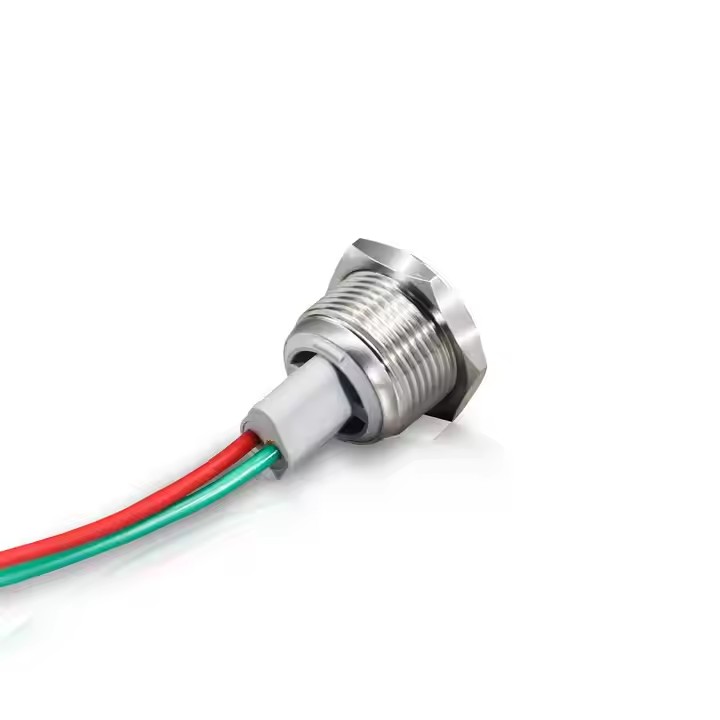
Pin Configuration: The 2.8mm solder pins provide a secure, reliable connection suitable for high-vibration environments, such as those generated by high-speed roller cam drives.
5. Material Science: The Foundation of Reliability
The specific materials used in these components ensure longevity and safety:
Base Material: Modified Nylon PA66 offers excellent mechanical strength, heat resistance, and insulation properties.
Lamp Cover: Polycarbonate (PC) is used for its high impact resistance and clarity, ensuring the LED light remains visible and protected even in the event of accidental impacts from tools or workpieces.
Compressive Strength: The insulation between the pins and housing is tested to withstand 800 VAC at 20 mA/min, guaranteeing operator safety and preventing short circuits in high-voltage environments.
Conclusion: Small Component, Big Impact
In precision industries like CNC machining—where every second of uptime counts and every micron matters—the quality of your auxiliary components is just as important as the main drive system. A high-quality industrial panel indicator ensures that your operators receive clear, reliable feedback, while its rugged construction ensures it survives the rigors of the shop floor.
When selecting components for your next machine build, don’t overlook the details. A robust, technically superior indicator switch is a small investment that pays dividends in safety, reliability, and operational efficiency.
