
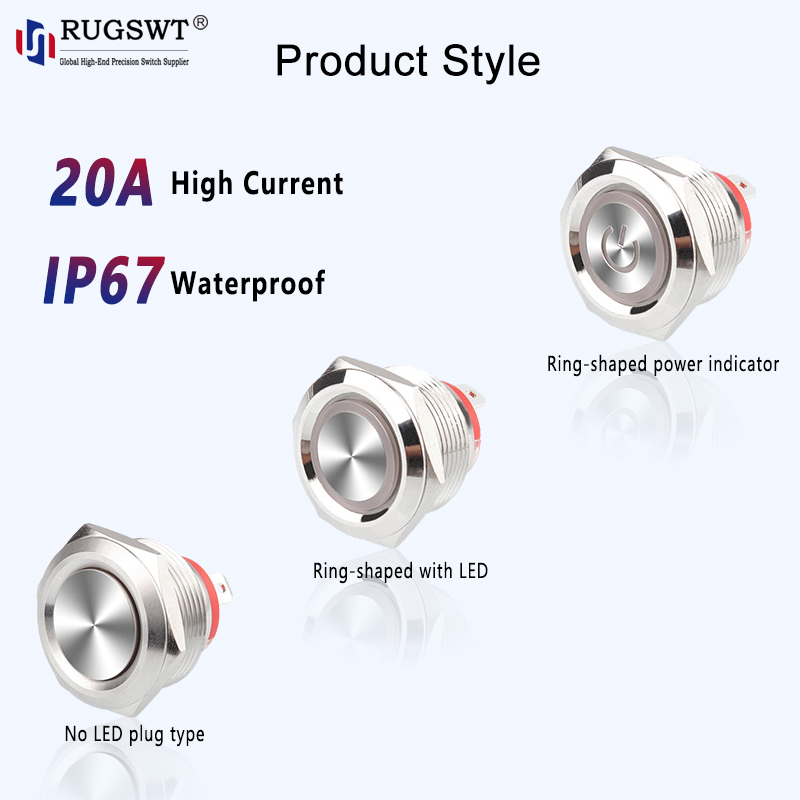
 Discover the rugged 20A Metal Push Button Switch with IP67 waterproofing, silver tin oxide contacts, and multi-voltage LED options. Ideal for 24/7 industrial environments.
In the world of industrial automation and heavy machinery, a switch failure isn’t just an inconvenience—it’s a safety hazard and a financial loss in downtime. When designing control panels for CNC machines, conveyor systems, or heavy pressing equipment, you need components that bridge the gap between high electrical load capacity and human-machine interface (HMI) reliability.
The latest generation of High Current 20A Metal Push Button Switches (available in 16mm, 19mm, 22mm, 25mm, and 30mm mounting holes) is setting a new standard for robustness in the industrial sector.
Here is why this switch series is the perfect fit for your next industrial control station project.
1. Handles High Inrush Currents with Ease
Industrial environments are filled with inductive loads—motors, solenoids, and relays. These devices draw massive inrush currents when starting up. Many standard switches weld shut under these conditions, but this switch is built differently.
Rated Heating Current (Ith): 20A at 250VAC. This means the switch is designed to handle the heat generated by high currents continuously.
Contact Material: It utilizes Silver Tin Oxide (AgSnO2) alloy contacts. Unlike traditional silver cadmium oxide, AgSnO2 offers superior welding resistance and longer electrical life under high inrush loads, specifically tested to DC-13 (1.25A at 250V) and AC-15 (7.5A at 250V) standards.
2. Sealed for Harsh Environments (IP67)
Industrial floors are dirty. They are filled with metal shavings, coolant sprays, and dust.
Waterproof Rating: IP67 at the button terminal. Whether it’s a wash-down station in a food processing plant or an outdoor mining control panel, this switch is completely protected against dust and immersion in water.
3. Material Durability Against Corrosion
The physical toll on industrial gear is high. We built this switch with a focus on anti-corrosion materials:
Housing Options: SUS304 Stainless Steel, Brass (Nickel-plated), or Anodized Aluminum Alloy. For chemical plants or marine applications, the SUS304 option is ideal.
Key Material: Polycarbonate (PC) combined with SUS316 Stainless Steel. SUS316 offers even higher corrosion resistance than 304, specifically against chlorides and other industrial solvents.
4. Customizable Feedback (LED & Operation)
Operator clarity is key to safety. This switch allows for high visibility in noisy, dark environments:
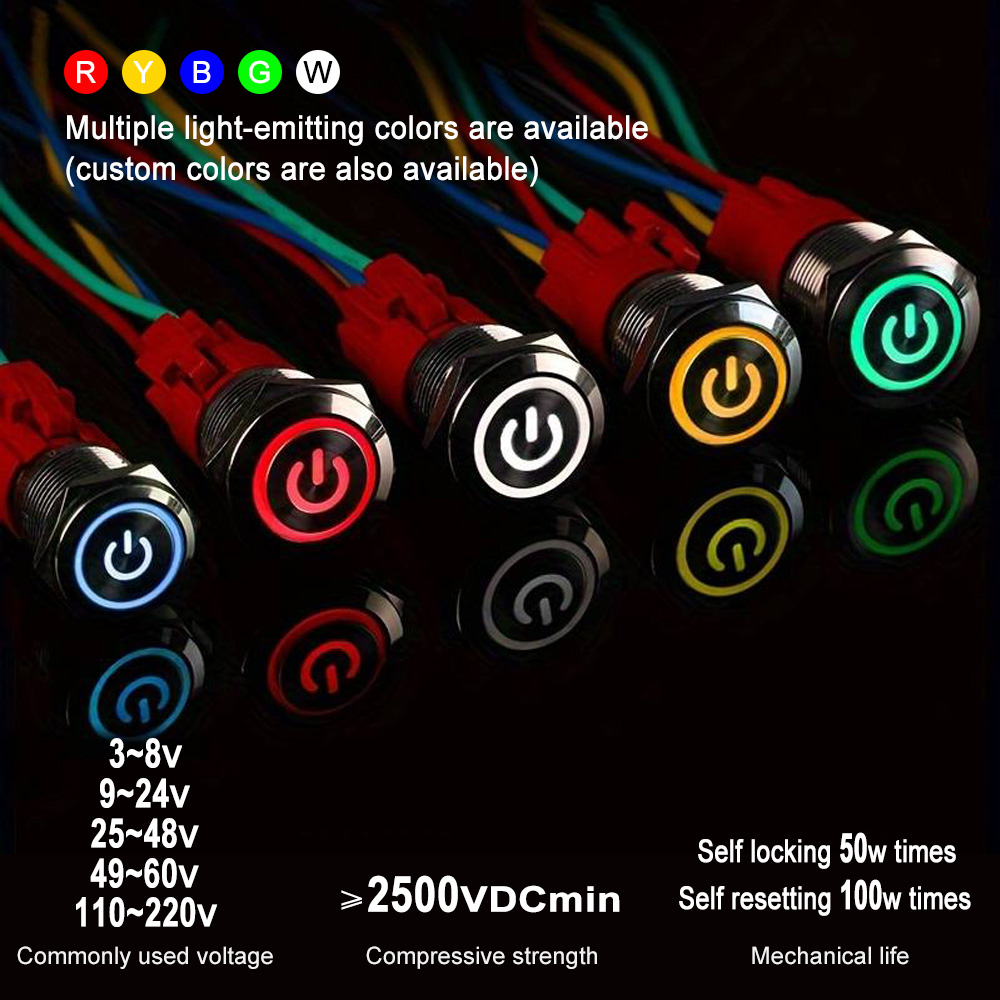
Multi-Color Illumination: Options range from single colors like Red, Green, Blue, and White to multi-color combinations (Red/Green/Blue) that can signify different machine states (e.g., Green for Running, Red for Fault).
Wide Voltage Range: The LED bead supports voltages from 3.3V to 220V AC/DC, making it compatible with both low-voltage logic circuits and direct line voltage indication.
Momentary or Maintained: You can choose Self-locking (maintained action for continuous run) or Self-resetting (momentary for jog functions).
5. Precision Engineering for Tight Spaces
Space inside a modern control panel is at a premium.
Short Body Design: Despite its 20A rating, the switch is designed to be compact behind the panel.
Pin Style: The 2.8 x 0.5mm quick-connect terminals (separate for switch and LED) ensure secure wiring harness connections, reducing assembly time in mass production.
Technical Specifications at a Glance
Mounting Hole: 16mm, 19mm, 22mm, 25mm, 30mm
Electrical Life: >30,000 cycles at full load (AC-15)
Mechanical Life: >1,000,000 cycles (at low load)
Insulation Resistance: ≥100MΩ at 500VDC
Dielectric Strength: 2500VAC between pins and housing
Conclusion
When you are specifying components for a CNC machine, a packaging line, or a marine control system, you need a switch that won’t let you down. The 20A Metal Push Button Switch combines high current handling with the ruggedness of stainless steel and the flexibility of modern LED indication.
It is not just a button; it is a long-term investment in operational reliability.
